Table Of Content

By the end of the schematic design process, you should have architectural drawings like floor plans, elevations, sections, renderings, and 3D models. It’s where you get to experiment with different design concepts for the project and envision how it will look and feel without having to build it. Together, you will determine the best one for refinement and development. Site analysis is an architectural design process of identifying how the site’s physical and environmental features will affect the building’s design. Programming is the process of determining the physical characteristics of a building or space.
Analysis of proposals
Clients who request more than one design option will have a higher Schematic Phase fee. There may be differing fee breakdowns proposed by different architecture firms. Schedule your free consultation with mimAR studios now if you are ready to start. Gathering data about the existing conditions on site is the other part of the Pre-design phase. This usually involves mapping the land so that the location and details of any existing structures can be determined.
A Project Owner's Guide to Commercial Building Design
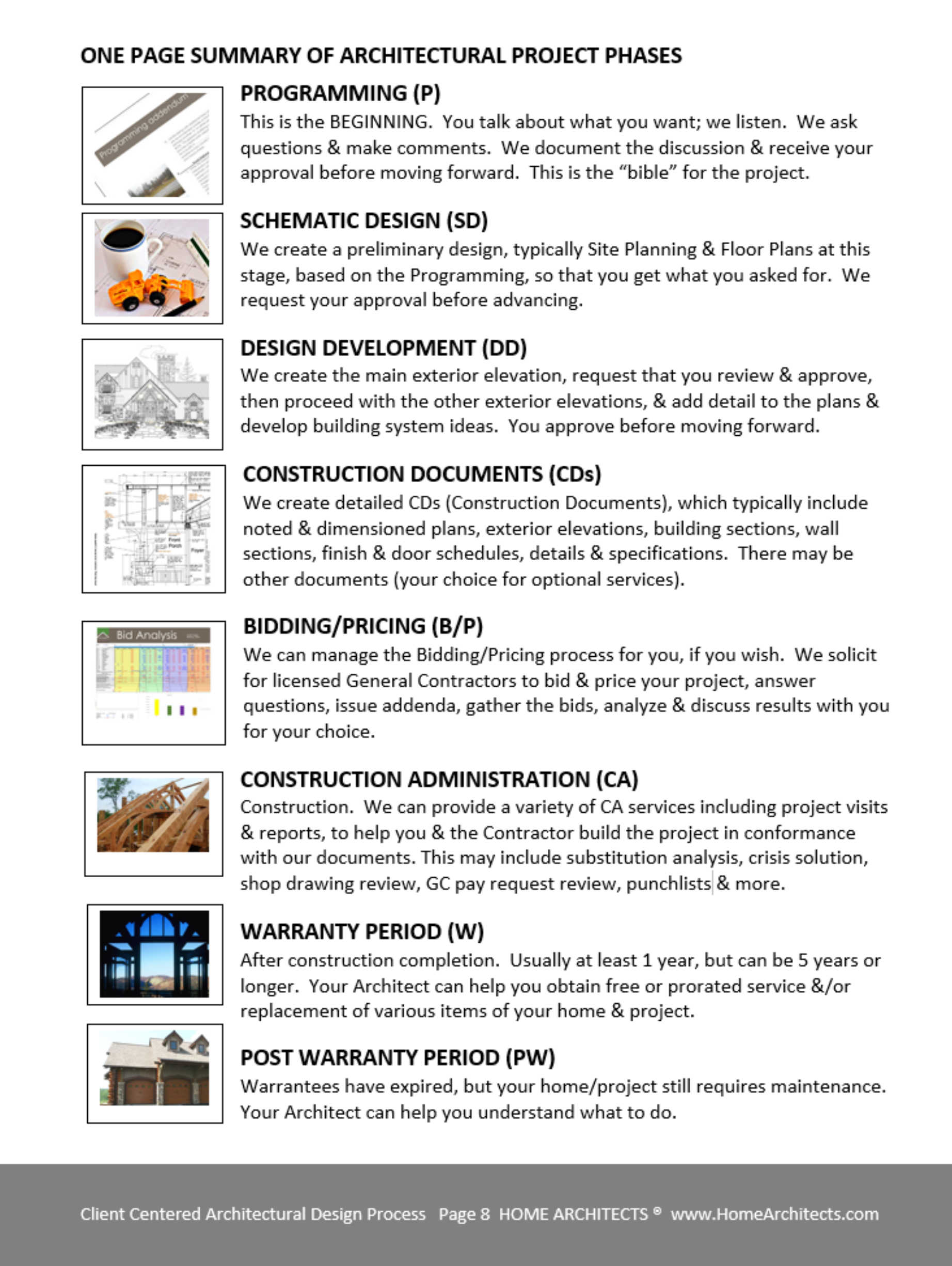
However, it is common for the architect to provide other services due to change orders.During this phase, 3D renderings still provide a critical reference to help the construction go as planned. Detailed visuals and technical plans for contractors will help ensure that the plan is adhered to with minimal deviation. Also during this phase, the architect submits multiple drawing sets for approval from the Department of Buildings. A separate collection of Construction Drawings will also be required.Obtaining the necessary building permits can take a considerable amount of time.
Construction Documents (CD)
When the construction document phase begins, the design has been finalized by the designer and approved by the client. These documents are created keeping the overall vision for the project and the client's specifications in mind. The construction documents phase most prominently involves an architect as they are responsible for creating blueprints.
Bidding
The plans and sheets depict grading, drainage of the ground, but also zoning and site development requirements, property lines, pavement and sidewalks, and walls and curbs. It’s the moment in which the architect needs to summon into play a variety of interested different actors. The role of the architect is then to orchestrate their concerns into the best possible solutions for the project. You don’t want to spend 30% of your total time on the Schematic Design phase if you should only spend 15%. When this happens, the cost becomes less important and you can focus more on other aspects of the bid – like the quality or experience of the contractor.
Architecture Phases Of Design Explained
The programming phase hasn’t been included here, as it’s not technically part of the design phases. If you do provide programming services, they would typically be under their own architectural contract or part of the Schematic Design phase. The first step in the architectural design phases, the programming or the pre-design phase, is for problem-seeking. You use the program as a guide for the design as you move through the architectural design process, ensuring that the project stays on track and meets the client’s goals. It also helps you identify any potential challenges or constraints early on.
This realistic visualization will also help manage expectations and mitigate any misunderstandings later. It will result in more trust from the client and less stress for the architect. The architect is expected to assist the client in generating a punch list before the end of this phase to ensure that all work is completed to the client’s satisfaction. A punch list, which is often attached to a certificate of substantial completion, is a document that lists work items that do not meet contract specifications. Simply put, it is a list of tasks that must be completed before a project can be considered complete. Because this is the final stage of the architectural design process, the participation of all project stakeholders will ensure a smooth building process and a high-quality outcome.
While Leonardo.Ai does not offer a dedicated AI architecture generator, our suite of AI-first tools is incredibly useful for architects. Technical information will be developed to begin to provide a full picture of the design, and how it will be constructed. The finer details of how materials will relate to one another, connections between elements, will all be considered at this stage, as the design is prepared for construction. The project may need to be prepared for planning applications, and therefore may require 3d models, or visualisations to convey the final design. In some cases, sales and marketing literature will be considered for larger projects as the client begins to consider promoting the development. The refining and development process requires constant reflection on the initial stages of design, referring to research and data collected in the early stages, and revisiting early proposals and ideas.
During meetings, the builders go through construction documents and reviews materials and finish schedules. The construction administration phase refers to the portion of the construction process that the architect is responsible for. This includes reviewing product submittals for general compliance with the construction documents and coordinating specific details that might arise during the construction process. The above information is a basic break down of the Architect’s Phases Of Design.
The design team may also responsible for sending a final copy of drawings and specifications to the local permitting authority for review and approval. Usually, this is the longest step in the architectural design process, as architects must ensure their design is planned well for execution, as well as waiting for documents to be approved. In the next stage, the architect transitions from providing design services to producing working construction drawings for the development of the project. If you’re an architecture student, the design process is similar to that of architects, and we also highlight here the key steps to follow to complete your project in an organized way.
With this in mind, a project’s time frame for each phase will depend on its complexity. Since design development is such a complex phase, here are some tips for you that will make the process much smoother. Perspective images are one of the most direct and intuitive ways to understand and negotiate design choices.
In addition to the kickoff meeting, your architect may facilitate a visioning workshop. While the kickoff meeting establishes managerial objectives, a visioning workshop sets the design process in motion. You will identify key decision makers, establish communication flows, and discuss file-sharing systems and schedule milestones. Your architect may also use this meeting to better understand your organization and mission—setting the stage for the collaborative process ahead. Your architect begins by engaging stakeholders, establishing goals, and exploring concepts.
The Kent School of Architecture and Planning suggests that students sketch out their ideas. Following the first consideration of ideas for the project, the next process is to develop designs and present them to the client. This can lead you to develop a more thorough design that includes characteristics of several initial ideas. After you brainstorm initial designs for the project, it is time to review them and consider which elements are working. For example, the shadow conditions of one idea may be most favorable, while the layout of another might function the best.
Architectural Design as a Storytelling Medium - Alaska Business
Architectural Design as a Storytelling Medium.
Posted: Tue, 20 Feb 2024 08:00:00 GMT [source]
Through a visual listening exercise, your architect can gain a better understanding of your likes and dislikes. Our BIM Professional Course is taught by globally renowned industry experts with years of real-world experience working in the industry. You will also understand how BIM increases the efficiency of each of these design phases.
This is where the building’s persona evolves, yet not in too much detail. The resulting drawings and specifications are overall meant to integrate all those systems into the project. Here’s a detailed list of the categories of documents that conform the design development. The architectural design development process goes from schematic conception to accurate execution. For that to happen, architects need to go through several instances of outlining, definition, and integration of the multiple layers of the project. This is also the point where you will be solidifying the plans into actions – developing not just what will be done, but how it will be done.
This step is only applicable to architecture firms that aren’t building the project themselves. As a result of this there are a core set of drawings and documents that (most) projects require in order for them to be procured successfully, and be completed efficiently and without error. That includes architects, structural and civil engineers, and construction managers. If it’s a matter of swapping out tile floors for sustainable bamboo wood flooring, that’s doable.


No comments:
Post a Comment